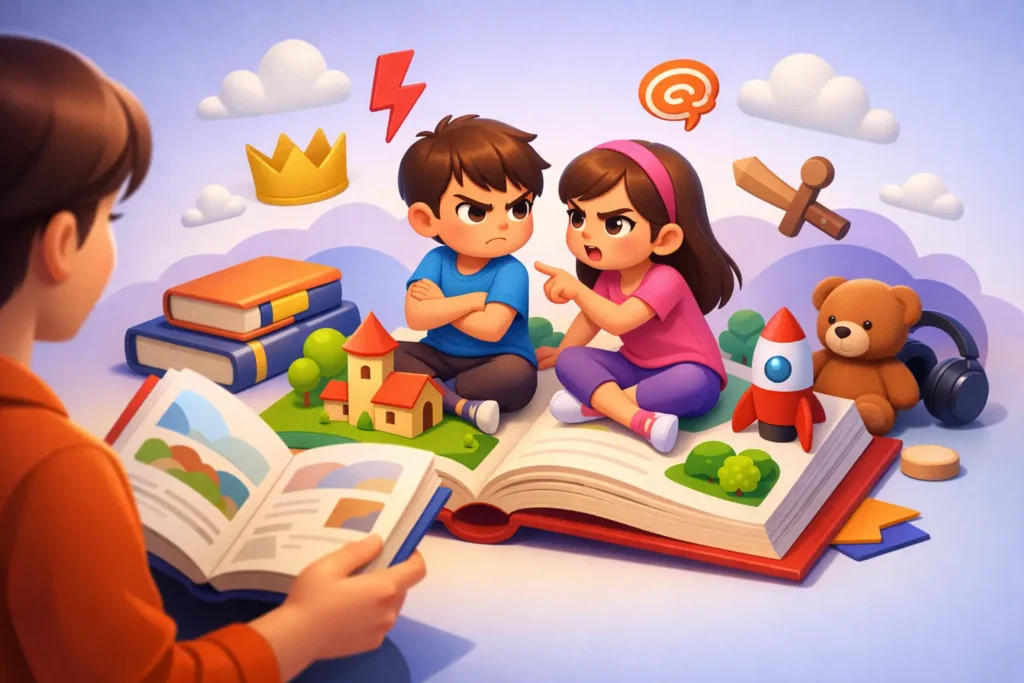
The argument may begin with one stuffed animal, one turn with a favorite game, or the all-too-familiar question: “Who gets to sit next to Mom?” The best sibling conflict stories give children a safe way to recognize those heated moments without feeling lectured. Through characters who feel jealous, left out, annoyed, or misunderstood, kids can see that big feelings are normal – and that families can find their way back to kindness.
For parents, grandparents, and educators, these books do more than fill a few quiet minutes before bed. They create gentle openings for conversations about sharing, fairness, patience, and making amends. A child may not want to discuss the argument they had at dinner, but they may be very ready to talk about what a fictional big brother or little sister could have done differently.
What Makes a Sibling Conflict Story Helpful?
Not every story about brothers and sisters needs a perfectly peaceful ending. In fact, a useful story leaves room for the truth: siblings can love each other deeply and still get on each other’s nerves. The most helpful books show the feeling behind the behavior. A child who grabs a toy may be worried about being left out. An older sibling acting bossy may be struggling with a new baby or a change in family attention.
Looking for a calming bedtime activity?
Download our soothing coloring storybooks — 30+ delightful printable pages for children ages 3–8. Ready to print instantly for only $17.00!
Look for stories that avoid labeling one child as “the bad one.” The strongest read-alouds show more than one point of view, allow characters to make mistakes, and include some form of repair. That repair may be an apology, a shared laugh, a kind gesture, or simply a new understanding. For younger children especially, a calm ending can make bedtime feel reassuring rather than tense.
8 Best Sibling Conflict Stories for Children
1. The Pain and the Great One by Judy Blume
This warm, funny story follows a brother and sister who each believe the other gets all the attention and has all the advantages. The clever part is that readers hear both perspectives. The “Pain” is not simply difficult, and the “Great One” is not simply spoiled – each child has real frustrations.
It is a wonderful choice for helping children understand that fairness does not always look identical. After reading, ask, “What do you think each child wanted most?” That question can lead to a more thoughtful conversation than asking which sibling was right.
2. My Rotten Redheaded Older Brother by Patricia Polacco
Patricia Polacco tells a lively story of a younger sister who feels constantly outdone by her talented, teasing older brother. Their rivalry feels larger than life, just as sibling competition often does in childhood. Yet the story also reveals a moment of genuine care that changes how the sister sees him.
This book works especially well for elementary-age children who compare themselves to a sibling’s skills, friendships, or privileges. It reminds readers that admiration and irritation can live side by side.
3. Julius, the Baby of the World by Kevin Henkes
When Lilly’s new baby brother arrives, she is not impressed. She calls Julius rude, smelly, and generally inconvenient. Her feelings may sound dramatic, but they are deeply familiar to children adjusting to a baby who suddenly needs so much family attention.
Nurture kindness & empathy tonight
Explore our gentle moral bedtime fables for children ages 3–8. Heart-warming character-building stories ready to read instantly for only $17.00!
The story is tender without pretending that becoming an older sibling is easy. Read it before a new baby arrives or anytime a child needs reassurance that jealousy does not make them unloving. It is what they choose to do with that feeling that matters.
4. Peter’s Chair by Ezra Jack Keats
Peter discovers that his baby sister is growing into the things that once belonged to him, including his little blue chair. His response is quiet and relatable: he tries to take the chair away so nothing else can change.
For preschoolers, this simple story puts a name to the sadness that can hide beneath possessiveness. Peter’s eventual decision offers a gentle model of acceptance, but it does not rush him there. That patience makes the book especially comforting.
5. Just Me and My Little Sister by Mercer Mayer
Little Critter wants time with his friends, but his little sister wants to come along. The situation quickly becomes frustrating as she copies him and interrupts his plans. Many children will recognize the feeling of wanting space from a younger sibling.
The book is lighthearted and easy to follow, making it a good pick for younger readers. It can help caregivers explain that wanting personal space is okay. The important lesson is how to ask for it without being cruel or excluding someone unnecessarily.
6. I Will Not Ever Never Eat a Tomato by Lauren Child
Charlie is trying to feed his very determined little sister, Lola, who refuses nearly every food on the table. Their disagreement is playful rather than harsh, but it shows a familiar sibling challenge: one child wants control while the other wants cooperation.
Charlie solves the problem with imagination, turning ordinary foods into exciting new things. This story is a lovely example of conflict resolution that does not rely on winning an argument. For children, it shows how creativity and respect can make everyday disagreements feel smaller.
7. Sisters by Raina Telgemeier
For older elementary readers, this graphic novel offers an honest look at the complicated bond between sisters. Raina wishes for a sister, but once Amara arrives, the relationship is not what she expected. The story includes bickering, embarrassment, competition, and family travel stress – all told with humor and heart.
Because the characters do not suddenly become best friends, this is a particularly realistic choice. It shows that sibling relationships can change gradually as children learn more about themselves and each other. Consider it for independent readers around age 8 and up, or share it together over several evenings.
8. Fudge-a-Mania by Judy Blume
Peter Hatcher has had plenty of experience being irritated by his energetic younger brother, Fudge. In this story, Peter learns that his family will be spending the summer near the family of his longtime rival, Sheila Tubman. The pressure of close quarters brings plenty of conflict, including sibling tension.
This chapter book is best for confident elementary readers or family read-aloud time. It is funny, fast-moving, and honest about the way small annoyances can build up. Parents can use Peter’s reactions to talk about taking a break, speaking respectfully, and noticing when irritation is becoming unkindness.
How to Use Sibling Stories at Bedtime
A sibling conflict story works best when it is an invitation, not a courtroom. Avoid turning every page into a lesson about what your children did wrong that day. Instead, let the story lead. A simple question such as, “Have you ever felt like Peter?” gives a child the choice to share without pressure.
If both children are listening, make space for each perspective. You might say, “Sometimes older siblings want more independence, and sometimes younger siblings want to be included. Both feelings can be true.” This language helps children move away from blaming and toward understanding.
When a story includes an apology, point out what makes it meaningful. Did the character name what happened? Did they try to help fix it? Did the other child need a little time before feeling better? These details teach that repairing a relationship is more than saying two quick words.
It also helps to choose the book based on the moment. A story about a new baby may bring comfort during a major family transition, while a funny book about personal space may be perfect after a squabble over toys. If your children are already overtired, select a shorter, gentler story and save a more emotional chapter book for another night.
At Bed Time Kids Fables, we believe bedtime stories can give children language for the moments that are hardest to explain. A few pages read with patience can help a child feel seen, even after a difficult day.
Tonight, let the story do some of the gentle work. Sit close, read slowly, and remind your children that families do not have to be perfect to be loving. Every small act of listening, sharing, or trying again helps siblings build a stronger bond.

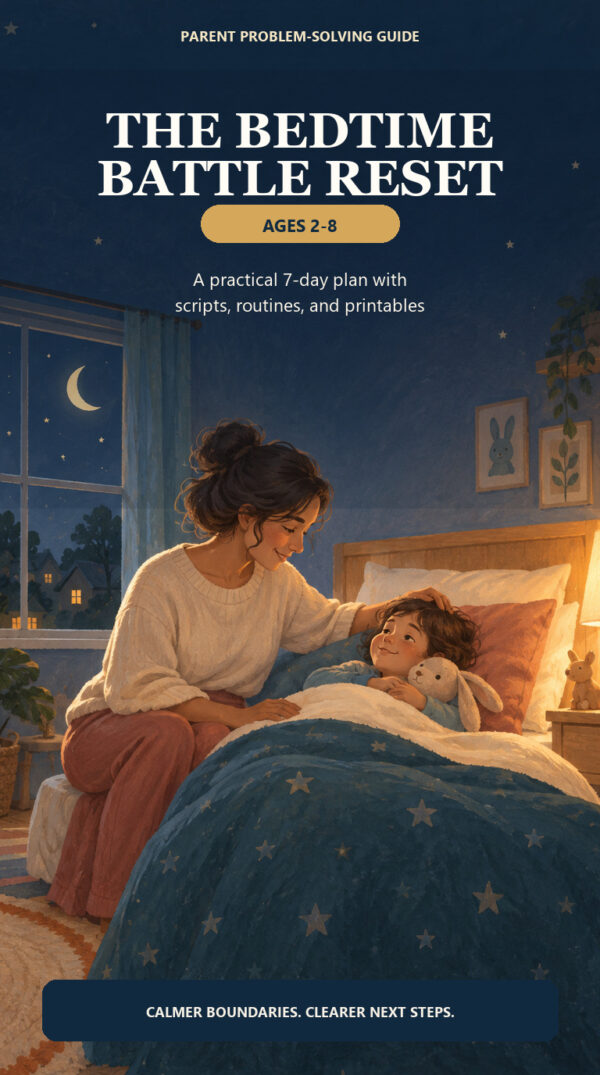
The Bedtime Battle Reset: A 7-Day Parent Guide for Ages 2-8
- Instant Downloadable & Printable PDF (Print at home or read on tablet)
- Soothing bedtime illustrations & gentle character-building moral
- Specially crafted for kids ages 3 to 8
-

The Bedtime Battle Reset: A 7-Day Parent Guide for Ages 2-8
$17.00 Add to cart -
Mountain Trail Dot-to-Dot: Number Connections for Ages 5–6
$5.00 Add to cart -
Tiny Tails Baby Animal Parade – Printable Baby Animal Coloring Book for Kids Ages 3-8
$5.00 Add to cart -
Sprinkle Street Sweethearts – Printable Sweet Treat Coloring Book for Kids Ages 3-8
$5.00 Add to cart