

Potty Training Refusal: Low-Pressure Parent Guide for Ages 2-4 (PDF)
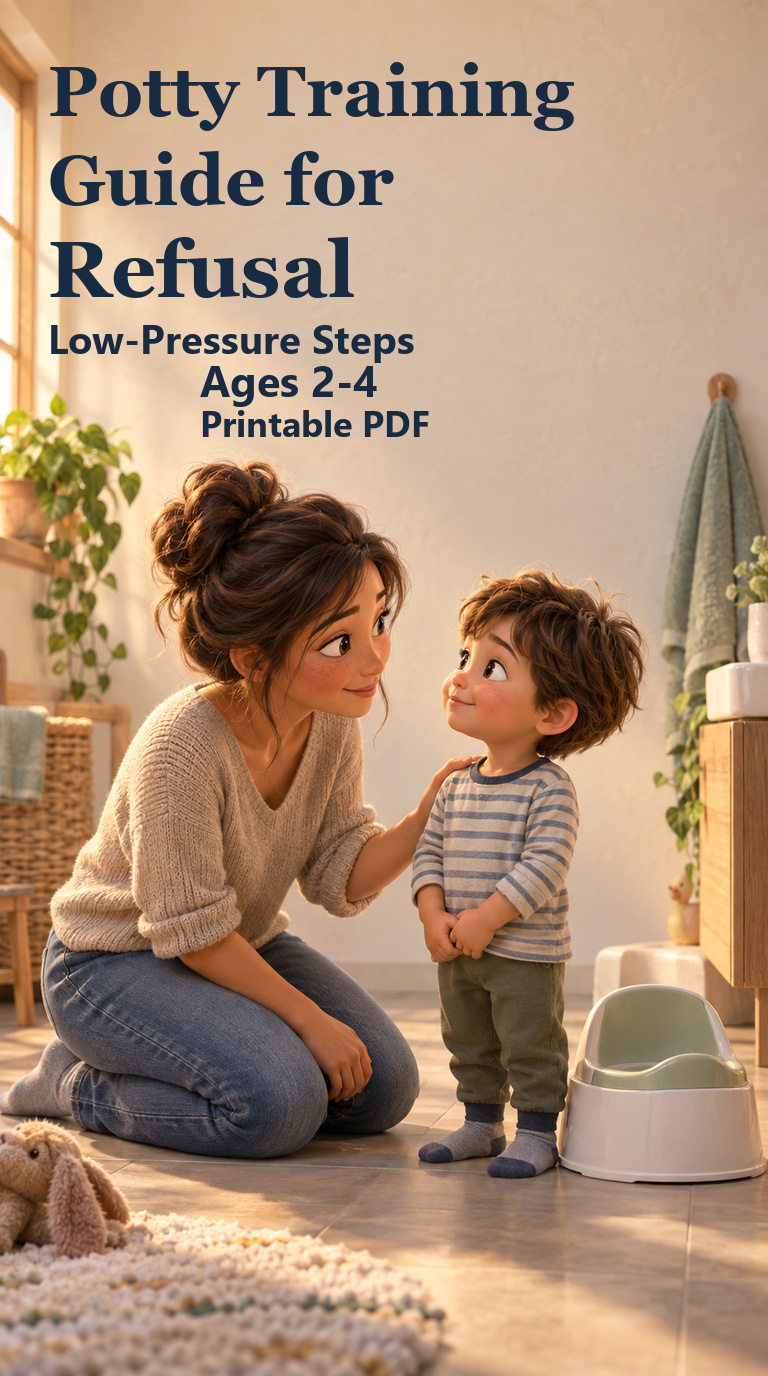
A potty training refusal guide for ages 2-4 with five action sections, comfort checks, parent scripts and three printable writing tools. One 22-page US Letter PDF for daytime practice; no promised training timeline or physical shipment.
$9.99
Instant Downloadable & Printable PDF
Potty training refusal can leave caregivers unsure whether to practice, pause or ask for support. This printable guide for ages 2-4 organizes daytime observations and low-pressure next steps.
A calmer decision after the next refusal
Maybe your child understands the potty but does not want to sit. Maybe adult reminders work until a change of caregiver or a difficult bowel movement leaves everyone unsure what to do. This guide helps caregivers of children ages 2-4 organize what they observe and choose supported practice, a pause in training demands, or qualified help.
The focus is daytime learning and adult responses. A comfort check comes before another attempt. Pain, suspected withholding, constipation or repeated soiling are reasons to seek professional advice, not reasons to intensify training.
Five steps you can use in order
- Prepare one comfortable setting and identify the part that is difficult.
- Choose practice, pause or support using observations rather than a pass score.
- Offer a predictable opportunity, help with practical tasks and end without demanding a result.
- Adapt a specific obstacle, including differences between urine and stool practice.
- Give caregivers the same plan and review comfort, help needed and questions that remain.
Short original scripts show what to say after a refusal, during a handoff and after an accident. Composite examples illustrate how to change one practical detail without assigning motives or comparing a child with siblings.
Three low-ink tools
- Comfort and next-step decision sheet: record the difficult part, questions for a clinician and one next action.
- Caregiver potty-practice plan: agree the setting, invitation, practical help, stop response and concern contact.
- Observations and review log: record useful episodes and decide what to keep, simplify or ask about.
These are printable writing templates, not interactive forms, sticker rewards or a diagnostic readiness test. The guide explains differences in professional starting advice and links nine checked resources from AAP/HealthyChildren, Raising Children Network, NHS, ERIC and CDC. Its combined educational plan has not been tested as a program.
Your digital file
You receive one 22-page searchable PDF in US Letter portrait, 8.5 x 11 inches, with a full-color illustrated cover, clickable navigation and three printable writing tools. Read on screen or print the pages you need. Use actual size or fit to your printer’s printable area and check the writing space.
Instant digital delivery after payment; no physical book or printed pages are shipped. Personal use within one family, including adults caring for that child. Resale, public sharing and redistribution to other families are not permitted.
This resource does not diagnose or treat a condition, provide a medication plan, cover overnight dryness, interpret school enrollment rules, or guarantee progress by a date. Follow individualized professional advice and seek support whenever symptoms, persistent distress or other concerns arise.
When potty training refusal starts with sitting on the potty
Refusing to sit, needing practical help and refusing a bowel movement can leave adults with different questions. The guide separates those observations so the next decision is not simply to repeat the same demand. Its comfort sheet, caregiver practice plan and review log support daytime decisions about practice, pause or qualified help. Pain, suspected withholding and constipation remain reasons to seek professional advice. These tools are writing templates rather than reward stickers or a diagnostic readiness test.
Choose a guide for a related situation
For a different family challenge, explore at-home toddler daily routine guide. Browse all parenting guides and printable family plans to compare age ranges, topics and included tools.