
A child notices the new student eating lunch alone. A sibling is crying over a broken toy. A friend says, “I’m fine,” but clearly is not. These small moments call for more than the right words. They ask children to pause, imagine another person’s feelings, and choose kindness. The top empathy books children connect with give families a gentle way to practice those skills long before a real-life moment feels confusing or big.
At bedtime, stories create a calm little space for this learning. Children can talk about a character’s mistake, worry, or hurt feelings without feeling put on the spot themselves. That makes empathy easier to understand and much easier to carry into the next day.
What Makes an Empathy Book Worth Reading?
A strong empathy story does not simply tell children to be nice. It lets them see what another person might be feeling and why. The best books use familiar experiences – being left out, making an assumption, feeling different, sharing, apologizing, or needing help – so children can recognize parts of their own lives.
Looking for a calming bedtime activity?
Download our soothing coloring storybooks — 30+ delightful printable pages for children ages 3–8. Ready to print instantly for only $17.00!
Look for books with characters who have real emotions and choices. A story is especially helpful when it shows that people can feel more than one thing at once. A child may be excited about a game and disappointed that a friend cannot play. They may feel angry and still care deeply about someone. This emotional complexity builds understanding without making story time feel like a lecture.
Age matters, too. Preschoolers often respond best to clear illustrations, repeated phrases, and simple social situations. Elementary-age children can begin discussing perspective, fairness, and the impact of their actions. The right book is one your child can enjoy now and revisit as their understanding grows.
12 Top Empathy Books for Children
1. The Rabbit Listened by Cori Doerrfeld
When Taylor’s carefully built creation is ruined, a parade of animals tries to fix the problem with advice. The rabbit simply sits and listens. This tender book gives children an important message: sometimes the kindest response is not solving, cheering up, or explaining. It is being present.
2. Last Stop on Market Street by Matt de la Peña
CJ does not understand why he and his grandmother ride the bus or why they do not have everything other people have. His grandmother helps him notice beauty, generosity, and community along the way. It is a warm choice for conversations about gratitude and seeing beyond first impressions.
3. Each Kindness by Jacqueline Woodson
This thoughtful story follows Chloe, who watches a new girl named Maya be excluded by classmates. When Maya is gone, Chloe understands that a chance to be kind can be missed. The ending is sad but meaningful, so it may be best for children ready to discuss regret and making a different choice next time.
4. Those Shoes by Maribeth Boelts
Jeremy wants the shoes everyone else seems to own, even though his family cannot afford them. As the story unfolds, he sees another child who needs the shoes even more. This book handles wanting, disappointment, poverty, and generosity with honesty and care.
Nurture kindness & empathy tonight
Explore our gentle moral bedtime fables for children ages 3–8. Heart-warming character-building stories ready to read instantly for only $17.00!
5. The Invisible Boy by Trudy Ludwig
Brian feels overlooked at school until a new classmate reaches out to him. The illustrations beautifully reflect how loneliness can make a child feel unseen. Read it before a new school year, classroom change, or playdate, then ask your child who might need an invitation.
6. A Sick Day for Amos McGee by Philip C. Stead
Amos cares for his animal friends every day, taking time to meet each one’s needs. When Amos is sick, the animals visit and care for him in return. Its quiet pace makes it especially lovely for bedtime and helps young children see that caring can be gentle, dependable, and mutual.
7. The Smallest Girl in the Smallest Grade by Justin Roberts
Sally notices the unkind things others overlook, from teasing on the playground to litter in the hall. She eventually finds the courage to speak up. This is a helpful book for showing that empathy includes noticing harm and using your voice to make a situation better.
8. Stand Tall, Molly Lou Melon by Patty Lovell
Molly Lou Melon is small, loud, and different from what some classmates expect. Her grandmother’s loving advice helps her remain confident when another child is unkind. The story invites children to consider how teasing feels while also celebrating self-respect and resilience.
9. The Day You Begin by Jacqueline Woodson
Starting somewhere new can make a child feel like everyone else belongs except them. This beautiful story recognizes the courage it takes to share your own story and to welcome someone else’s. It is a wonderful choice for families, classrooms, and children navigating differences in language, background, or experience.
10. Enemy Pie by Derek Munson
A boy believes he has an enemy until his father asks him to spend a day getting to know the child. Through shared play, his assumption begins to change. The playful premise helps children understand that conflict can shrink when we learn someone’s story instead of holding tightly to a first impression.
11. The Name Jar by Yangsook Choi
Unhei has recently moved from Korea and worries that classmates will not be able to say her name. Her classmates eventually learn that respecting a person includes respecting their name and identity. This book opens a caring conversation about belonging and curiosity without treating differences as something to fix.
12. Be Kind by Pat Zietlow Miller
After seeing a classmate spill grape juice, a young girl wonders what kindness really looks like. The answers are practical and child-sized: including someone, helping, listening, and choosing thoughtful words. It is a simple, encouraging read for younger children who are learning that small actions matter.
Turn the Story Into a Caring Conversation
You do not need a long discussion after every page. One or two gentle questions can help a child move from hearing a story to understanding it. Try asking, “How do you think that character felt?” or “What might you do if you saw this happen?” Give your child time to think. There is no need to rush toward a perfect answer.
It also helps to name what you notice. You might say, “I saw you look worried when Brian was left out,” or “You noticed that Jeremy wanted those shoes, too.” This shows children that their emotional observations are valuable. If they offer an answer that seems unkind or incomplete, stay curious: “What makes you think that?” Then gently add another perspective.
For preschoolers, bring the lesson close to home. “How could we help your sister when she is sad?” For older children, explore the harder parts. “Why do you think Chloe did not include Maya?” “What could make it difficult to speak up?” Empathy grows through practice, not through pressure.
Choosing the Right Book for Your Child
If bedtime has been tense or your child is tired, select a shorter, reassuring story such as A Sick Day for Amos McGee or Be Kind. When a child is working through friendship struggles, The Invisible Boy, Enemy Pie, and Each Kindness can create a safer starting point than a direct conversation.
Some stories touch on exclusion, financial hardship, or sadness. That is not a reason to avoid them, but it is a reason to stay nearby and read your child’s cues. A book can be powerful because it brings up a feeling. You can always pause, offer comfort, or return to the story another night.
Digital storybooks can make this routine especially easy for busy families. A ready-to-read bedtime title from Bed Time Kids Fables can help you build a small library of character lessons that is available whenever your child needs a calming, meaningful story.
Tonight, choose one character who has something to feel, not just something to do. Sit close, read slowly, and leave room for your child’s thoughts. The kindness they practice in that quiet moment may become the kindness another child remembers tomorrow.

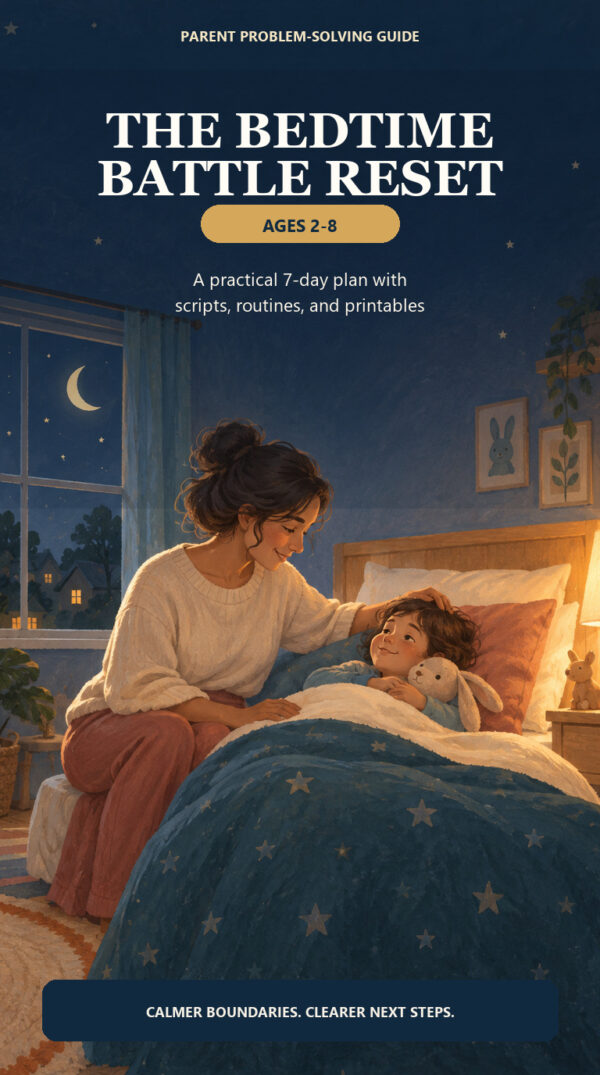
The Bedtime Battle Reset: A 7-Day Parent Guide for Ages 2-8
- Instant Downloadable & Printable PDF (Print at home or read on tablet)
- Soothing bedtime illustrations & gentle character-building moral
- Specially crafted for kids ages 3 to 8

-

The Bedtime Battle Reset: A 7-Day Parent Guide for Ages 2-8
$17.00 Add to cart -
Mountain Trail Dot-to-Dot: Number Connections for Ages 5–6
$5.00 Add to cart -
Tiny Tails Baby Animal Parade – Printable Baby Animal Coloring Book for Kids Ages 3-8
$5.00 Add to cart -
Sprinkle Street Sweethearts – Printable Sweet Treat Coloring Book for Kids Ages 3-8
$5.00 Add to cart