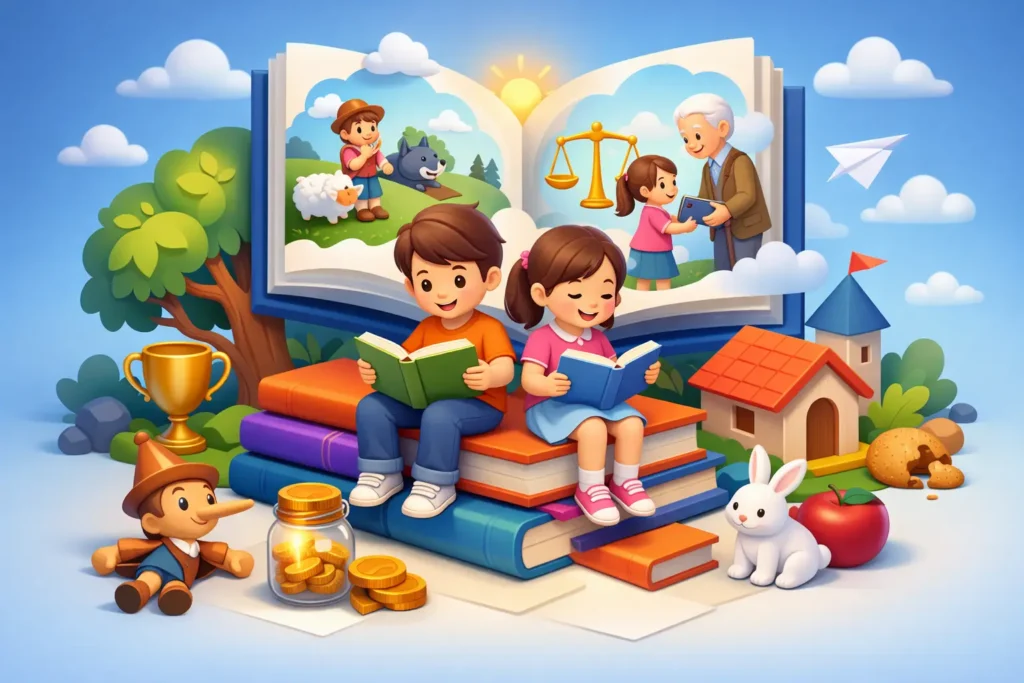
A spilled cup of milk, a broken crayon, a missing cookie – for a young child, telling the truth can feel much bigger than the mistake itself. The best honesty stories for children give kids a safe way to see that feeling play out. Through a character’s choices, they can learn that honesty may take courage, but it protects trust and helps make things right.
At bedtime or during a quiet classroom moment, these stories create a gentle opening for conversations that can be hard to start directly. Rather than asking, “Did you tell the truth today?” you can talk about what a character did, what they might have felt, and what your child would do next.
The most helpful stories about honesty do more than punish a character for lying. Young children need to understand why truthfulness matters: it helps people feel safe with one another, gives adults the information they need to help, and makes it possible to repair a mistake.
Look for stories with a clear conflict, an age-appropriate consequence, and a hopeful resolution. A child should come away knowing that honesty is not about being perfect. It is about choosing truth, even when the truth feels uncomfortable.
Some classic tales use frightening consequences or very broad lessons. Those can still be meaningful for older elementary readers, but preschoolers often respond best when an adult softens the message and emphasizes the caring choice at the center of the story.
This familiar fable is a strong starting point for talking about trust. A shepherd boy repeatedly tricks villagers by claiming that a wolf is near. When danger finally comes, no one believes him.
The story’s lesson is easy to understand: when someone lies often, people may struggle to believe them later. For younger children, keep the conversation focused on rebuilding trust. Ask, “What could the boy do tomorrow to show the villagers he wants to be truthful?” This helps the story feel instructive rather than simply scary.
In this classic folktale, a poor woodcutter loses his iron ax in a river. When offered gold and silver axes, he admits they are not his. His honesty is rewarded when he receives his own ax back, along with the others.
Children enjoy the clear choice in this story. It opens a simple discussion about taking only what belongs to us. It also offers a reassuring message for little ones: telling the truth when no one is watching is still a good choice.
A vain emperor is convinced by clever swindlers that he is wearing magnificent clothing that only wise people can see. Everyone pretends to admire the invisible outfit until a child speaks honestly.
This story is especially valuable because the child’s truth is not about a personal mistake. It is about speaking up when others are afraid to say what they see. For school-age children, it can lead to a thoughtful talk about respectful honesty and the courage to use their voice.
Pinocchio’s growing nose is one of children’s literature’s most memorable reminders that lies can grow into bigger problems. His adventures show how one dishonest choice can lead to worry, confusion, and trouble.
Because full versions can be long and intense, choose a retelling suited to your child’s age. Focus on Pinocchio’s growth rather than his mistakes. He learns that honesty, responsibility, and love help him become someone others can trust.
In this well-loved folktale, a boy named Ping receives a seed from the emperor and is asked to grow a flower. Despite his careful effort, nothing sprouts. On the day everyone brings beautiful flowers to the palace, Ping arrives carrying an empty pot – and tells the truth.
The Empty Pot is one of the gentlest honesty stories for children because it honors effort as well as truthfulness. Ping does not succeed at growing a flower, but he succeeds at being honest. It is a wonderful choice for children who worry about disappointing adults or getting an answer wrong.
In this story, a young girl receives a magical truth-telling companion that pushes her to say exactly what she thinks. She soon learns that honesty without kindness can hurt people.
This is an excellent choice for children who are beginning to understand social situations. It teaches an important distinction: being truthful does not mean blurting out every thought. Families can talk about using words that are both honest and kind, such as, “I do not like that game very much. Could we play something else?”
Ruthie tells a small lie about finding a special camera, then has to manage the uncomfortable feelings that follow. The story understands something children know well: a “little” lie can feel hard to take back once it has been said.
The gentle illustrations and relatable school setting make this a useful read for preschoolers and early elementary children. Afterward, remind your child that they can always come back and correct something they said. Honest words are welcome, even when they arrive late.
Many picture books use humor to show the tangled results of dishonesty. Stories in this style are helpful for children who may resist a lesson that feels too serious. A funny character can make the consequences of lying memorable without making a child feel judged.
When choosing humorous honesty books, look for an ending where the character makes amends. Laughter works best when it leads to empathy: the child can laugh at the mix-up, then understand why truth would have made things easier.
Not every meaningful honesty story needs to be a famous title. Simple, everyday stories often reach young listeners most directly. A child accidentally breaks a neighbor’s flowerpot, hides a poor test grade, or takes an extra treat, then chooses to admit it and help repair the harm.
These realistic plots are especially useful at bedtime because they mirror the small moral choices children face. At Bed Time Kids Fables, value-centered stories can help turn these ordinary moments into calm, encouraging conversations about character.
Sometimes the best story is one your child has heard from you. Share a short, age-appropriate memory about a time you made a mistake, felt nervous about admitting it, and learned that honesty helped. Children are often surprised to hear that grown-ups have had these feelings too.
Keep the ending hopeful. You might explain how a parent, teacher, or friend helped you fix the problem. This shows children that telling the truth is not a path to shame. It is a path toward support, responsibility, and a fresh start.
A story can plant a valuable seed, but the conversation afterward helps it grow. Keep questions simple and free from pressure. “Why do you think Ping brought the empty pot?” or “How did Ruthie feel after telling her lie?” gives children room to think aloud.
If your child connects the story to something that happened that day, listen before offering a lesson. A calm response matters. When children believe adults will help them solve a problem, they are more likely to tell the truth the next time something goes wrong.
It also helps to notice honesty in everyday life. Thank your child for admitting they spilled the juice, forgot an assignment, or made an unkind choice. You can still address the behavior while recognizing their courage: “I am glad you told me. Let’s clean it up together.”
For preschoolers, choose short picture books with one clear problem and a warm ending. They are still learning the difference between pretend play, wishes, and deliberate dishonesty, so concrete examples work best.
For children in kindergarten through second grade, stories with relatable school, sibling, and friendship situations are often ideal. They can begin to understand that lying affects how others feel and whether they can trust us.
Older elementary children may be ready for more complicated questions. What if telling the truth hurts someone’s feelings? What does it mean to tell the truth kindly? What should they do when a friend asks them to keep a secret that feels unsafe? At this age, a story can become a bridge to real-life problem-solving.
The goal is not to raise children who fear making mistakes. It is to raise children who know mistakes can be faced with courage. A loving bedtime story, followed by a patient conversation, reminds them that truth is always a good place to begin.
Our books