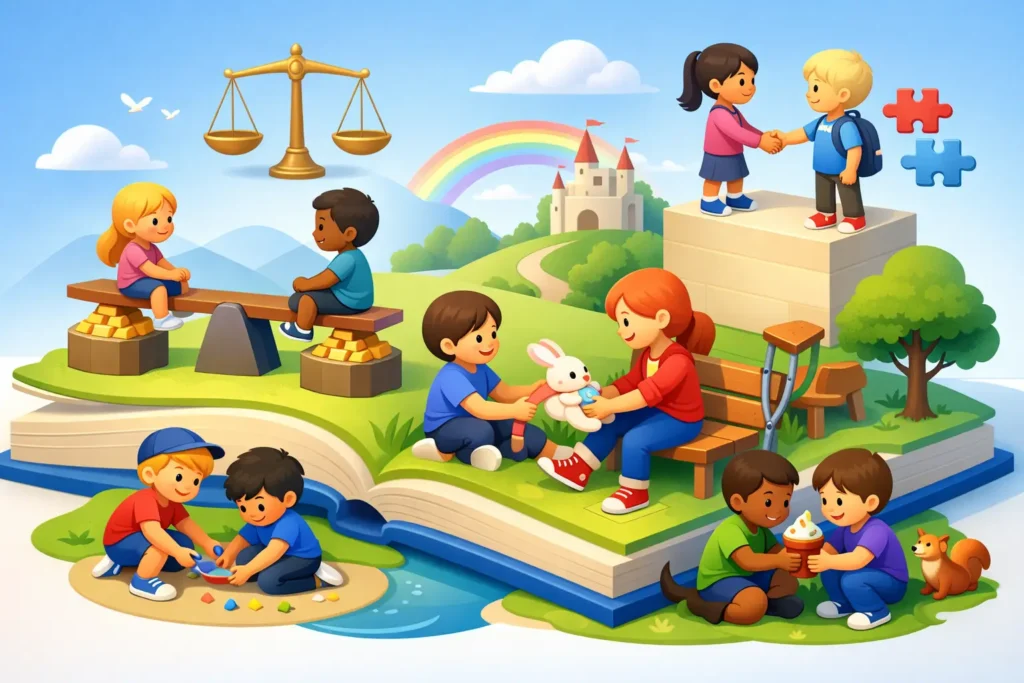
A child may not use the word “fairness” when a sibling gets the bigger cookie or a classmate skips the line. They will simply say, “That’s not fair!” Stories about fairness for kids give adults a gentle way to explore those big feelings before or after a real-life disagreement. At bedtime, children can consider what happened to a character, imagine a better choice, and carry that lesson into tomorrow.
Fairness is not always about making everything exactly equal. Sometimes it means taking turns. Sometimes it means listening to both sides. Sometimes it means giving someone what they need to participate. That is a lot for young children to understand, which is why a clear, engaging story can be more helpful than a lecture in the middle of a conflict.
Why fairness stories matter at home and school
Children are naturally alert to differences. They notice who received more attention, who got the first turn, and whether the rules changed. This awareness is a healthy starting point. The goal is to help them move from simply protesting an unfair moment to thinking about solutions that respect everyone.
Looking for a calming bedtime activity?
Download our soothing coloring storybooks — 30+ delightful printable pages for children ages 3–8. Ready to print instantly for only $17.00!
A good fairness story makes room for that growth. It shows that a character can feel disappointed without becoming unkind. It also shows that rules need to be applied thoughtfully, not just repeated. For preschoolers, the lesson may be as simple as sharing blocks or waiting for a turn. Elementary-age children can begin to consider effort, responsibility, inclusion, and how to repair harm.
Reading these stories at a calm time matters. A child who is upset rarely wants a long explanation. A child tucked into bed, however, may be ready to talk about why a character made a choice and what they would do differently. That quiet conversation builds empathy alongside reading skills.
7 stories about fairness for kids to share
The following story ideas work well as short read-alouds, conversation starters, or inspiration for a homemade family story. Choose examples that feel close to your child’s current world, but avoid using a story to shame them for a mistake. The purpose is guidance, not guilt.
1. The Two Apples
Maya and Eli each want the shiny red apple in the fruit bowl. Their grandmother cuts both apples in half, but Eli complains because Maya’s half looks slightly larger. Before anyone argues further, Grandmother asks Maya to choose one half and Eli to choose first tomorrow.
This simple story helps young children see that fairness can include a process everyone trusts. You might ask, “How did Grandmother make sure both children had a voice?” For a child who is learning to share, keep the focus on taking turns and finding a peaceful solution rather than proving who deserved more.
2. The Playground Line
At recess, Jordan waits patiently for the slide. When it is finally his turn, two children run in front of him. The teacher does not scold anyone immediately. Instead, she gathers the children, asks what happened, and helps them agree that everyone gets one turn before a second turn begins.
Nurture kindness & empathy tonight
Explore our gentle moral bedtime fables for children ages 3–8. Heart-warming character-building stories ready to read instantly for only $17.00!
This story teaches that fairness depends on rules people can understand and follow. It is especially useful for children who struggle with waiting. Ask, “Why is a line helpful?” Then make the connection to everyday life, such as waiting to choose a bedtime book or taking turns with a favorite game.
3. The Team with One Extra Player
A soccer club has an odd number of children, and no one wants to sit out. The coach first suggests that the youngest player watch from the bench, but the team realizes that she has been sitting out often because she is new. Together, they decide to rotate positions and give every player equal time on the field.
Here, children learn that treating people fairly may require looking at the whole situation. Equal does not always mean giving the same child the same role every time. Ask older children, “What made the team change its plan?” This opens a thoughtful discussion about including people who may otherwise be overlooked.
4. The Library Book Mix-Up
Noah borrows a library book from his classroom shelf and accidentally tears one page. He quietly puts it back because he is afraid of losing library privileges. Later, another child is blamed for the torn page. Noah speaks up, apologizes, and helps repair the book with his teacher.
Fairness also means telling the truth when someone else could be hurt by our silence. This story can feel especially meaningful for children who fear consequences after making a mistake. Remind them that honesty does not erase the problem, but it gives adults a chance to help make things right.
5. The Birthday Craft Table
During a birthday party, there are only enough glitter stickers for half the guests. The birthday child wants to keep the sparkliest sheet, while several guests have none. Her father suggests a plan: each child chooses one sticker first, and the remaining stickers can be shared after everyone has had a chance.
This is a warm example of fairness in a setting filled with excitement and big emotions. It also helps children see that being the host, the oldest sibling, or the first person to notice something does not always mean getting the most. Ask, “How did the birthday child help everyone feel included?”
6. The Rainy-Day Chore Chart
When rain cancels an outdoor playdate, three cousins are asked to help tidy the playroom. One cousin gets the easy job of putting pillows away, while another is asked to sort a huge basket of tiny toys. They begin to complain until their aunt explains that chores can be shared according to time, effort, and ability. The cousins switch jobs halfway through and finish together.
This story adds a useful layer of nuance. Fairness is not always dividing every task into identical pieces. A younger child may need a simpler job, while an older child can handle a harder one. What matters is that no one is ignored, overburdened, or treated as less valuable.
7. The Quiet Voice in the Class Vote
A class is choosing a theme for its reading corner. Most children want space adventures, but Priya softly suggests animal stories because they are easier for her to read. The class does not have to abandon its favorite idea. Instead, the teacher helps them create a space-themed corner with a basket of animal books at a reading level Priya can enjoy.
This story shows that fairness includes listening carefully, especially when someone has a quieter voice. It is a meaningful example for early elementary children, who are beginning to understand that a group decision should not leave one person out. Ask, “What could the class do so everyone feels welcome?”
How to make the lesson stay with children
After a fairness story, one or two gentle questions are enough. Too many questions can make bedtime feel like a test. Try asking what the character felt, what choice was fair, or whether there was another solution. Let your child disagree with the character or offer an answer that surprises you. These moments reveal how they are learning to see other people’s needs.
It also helps to name fairness when you see it in real life. You might say, “You let your brother choose first because he waited yesterday. That was thoughtful and fair.” Specific praise helps children connect an abstract value to an action they can repeat.
When conflict happens, return to the language from a familiar story. Instead of saying, “Stop arguing,” try, “What would the cousins with the chore chart do here?” A story gives children a shared reference point and can lower the temperature of a difficult moment.
Choosing fairness books for different ages
For younger children, look for short plots, familiar settings, and one clear problem. Sharing toys, waiting in line, and following simple rules are easy situations to understand. Repetition can be helpful too, because children often need to hear a lesson many times before they can practice it independently.
For children in kindergarten through elementary school, choose stories with more than one point of view. A character may make a reasonable choice that still hurts someone else, or a rule may need adjusting so everyone can join in. These stories encourage children to think beyond “I got what I wanted” and toward “Did this work for everyone?”
A ready-to-read digital storybook can be especially helpful on busy evenings. With a downloadable PDF from Bed Time Kids Fables, caregivers can keep a meaningful story close at hand for bedtime, quiet time, or a classroom reset without adding another complicated task to the day.
Fairness is learned slowly, through small choices made again and again. Tonight’s story may begin with an apple, a slide, or a missing glitter sticker. Tomorrow, it may help a child pause, listen, and choose a kinder path when fairness truly matters.
Printable Fairness Stories to Read Tonight
Our storybooks turn fairness into a bedtime conversation rather than a lecture. Every illustrated book is an instant PDF download for $5, ready to read on a tablet or print at home.
- Egon and Miles: The Baker and the Brave – appearances and fairness
- The Crow and the Pitcher – patience and problem solving
- The Ultimate 10-Book Mega-Bundle – 10 books for $15
More on fairness: all moral stories for kids, fables about sharing, and unity stories for kids.
Frequently Asked Questions
What is a fairness story for kids?
It is a short story where a character is treated unfairly, or must decide how to share something, and your child can see the result of each choice.
How do I explain fairness to a 5 year old?
Use concrete language: everyone gets a turn, everyone gets the same slice. Stories with two characters and one object make fairness easy to see.
What if my child says it is not fair?
Acknowledge the feeling first, then ask what would make it fair for both people. The goal is thinking, not compliance.
Which fables teach fairness best?
The Bundle of Sticks, The Two Goats, and The Lion and the Mouse are strong choices because sharing and cooperation visibly change the outcome.
Where can I find printable fairness stories?
Bed Time Kids Fables offers instant-download storybooks for ages 3-10. Browse the shop or start with the 10-book mega bundle.

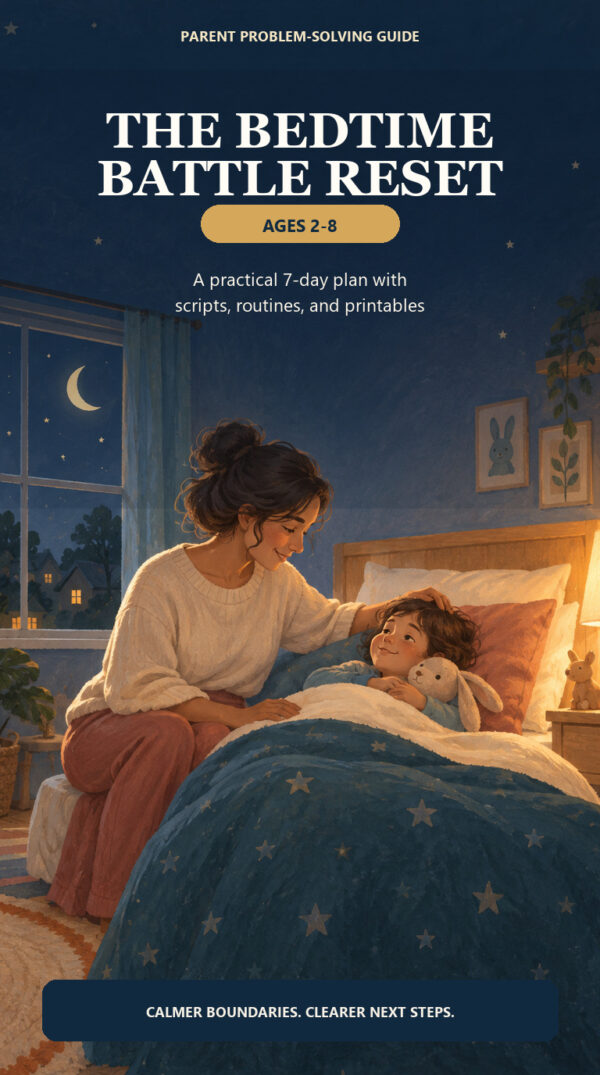
The Bedtime Battle Reset: A 7-Day Parent Guide for Ages 2-8
- Instant Downloadable & Printable PDF (Print at home or read on tablet)
- Soothing bedtime illustrations & gentle character-building moral
- Specially crafted for kids ages 3 to 8
-

The Bedtime Battle Reset: A 7-Day Parent Guide for Ages 2-8
$17.00 Add to cart -
Mountain Trail Dot-to-Dot: Number Connections for Ages 5–6
$5.00 Add to cart -
Tiny Tails Baby Animal Parade – Printable Baby Animal Coloring Book for Kids Ages 3-8
$5.00 Add to cart -
Sprinkle Street Sweethearts – Printable Sweet Treat Coloring Book for Kids Ages 3-8
$5.00 Add to cart