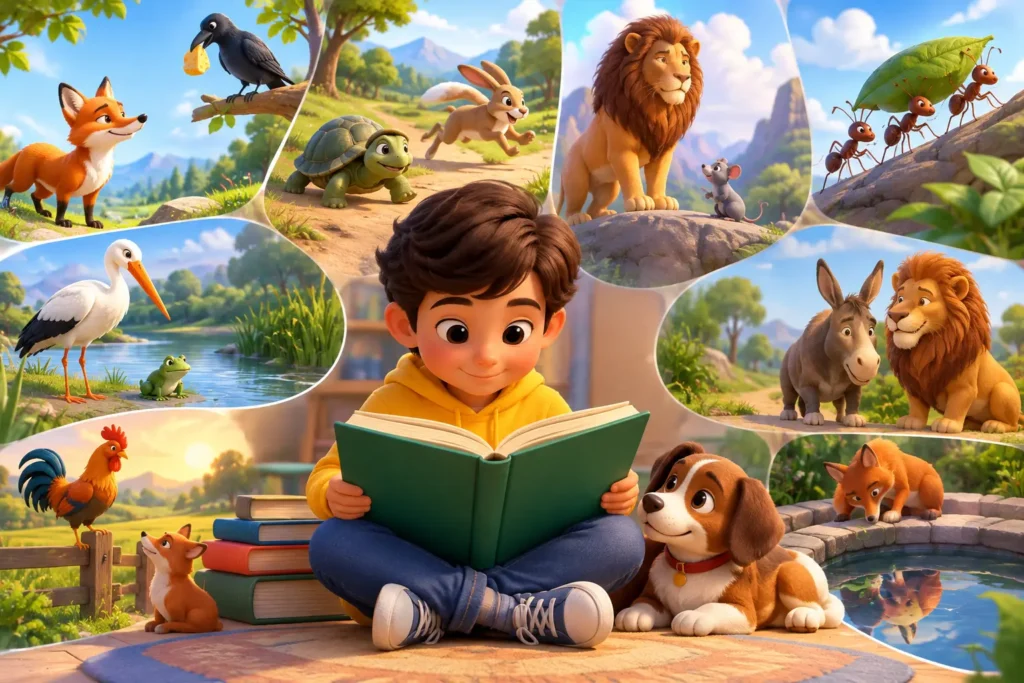
A child may not remember every detail of a story by morning, but they often remember how it made them feel. The best fable lesson examples give families a gentle way to talk about big ideas – telling the truth, helping a neighbor, being patient, or trying again – without turning bedtime into a lecture.
Fables work beautifully for preschoolers and elementary-age children because they are short, memorable, and often led by animals with very human feelings. A fox can be too clever. A mouse can be brave. A hardworking ant can show what preparation looks like. When children see choices play out through a character, they have room to think about their own choices safely.
Why fable lessons stay with children
A fable is more than a quick story with a moral printed at the end. It gives a child a small, understandable situation: a character wants something, makes a choice, and experiences a result. That simple pattern helps young readers connect actions with consequences.
The lesson should not feel like a rule delivered from above. For a four-year-old, the value may be as simple as, “We can help someone who is small.” For an eight-year-old, the same story can invite a richer question: “Was the character being helpful, or did they also need to set a fair boundary?” The right conversation depends on the child, the moment, and the story.
12 fable lesson examples to share at story time
1. The Tortoise and the Hare: Steady effort matters
When the speedy hare becomes overconfident and stops to rest, the slow tortoise keeps moving and reaches the finish line. The familiar lesson is that slow and steady effort can win the day.
For children, this is a comforting reminder that they do not have to be the fastest reader, runner, or puzzle solver to make progress. You might say, “What is something you are practicing a little at a time?” It is also a chance to explain that rest is good, but giving up on a responsibility is different from taking a healthy break.
2. The Boy Who Cried Wolf: Honesty builds trust
A shepherd boy repeatedly pretends that a wolf is coming for the excitement of seeing people rush to help. When danger finally arrives, no one believes him. The lesson is that dishonesty can make it hard for others to trust us.
Keep the conversation caring rather than frightening. Children make mistakes and sometimes tell untrue stories because they want attention, are worried about consequences, or are still learning. Ask, “How could the boy have asked for attention in a truthful way?” This helps children see honesty as a path to connection, not simply a way to avoid punishment.
3. The Lion and the Mouse: Kindness is never too small
A lion chooses not to harm a tiny mouse. Later, that mouse frees the lion from a hunter’s net. The story teaches that even someone small can make a meaningful difference.
This fable can be especially encouraging for children who feel overlooked. Talk about small acts of kindness: holding a door, including a classmate, feeding a pet, or helping put books away. The mouse does not need to be powerful to be helpful, and neither does your child.
4. The Ant and the Grasshopper: Prepare for what is ahead
While the ant gathers food for the colder season, the grasshopper spends the warm days singing and playing. When winter comes, the grasshopper is unprepared. The lesson is often described as the value of diligence and planning.
There is useful nuance here. Children need play, creativity, and rest, just as they need responsibility. Frame the story around balance: “First we put tomorrow’s clothes out, then we have time for a game.” This makes preparation feel practical and positive rather than joyless.
5. The Fox and the Grapes: Handle disappointment honestly
A fox wants grapes hanging high on a vine but cannot reach them. Instead of admitting disappointment, he claims the grapes were sour anyway. The lesson is that it is better to be honest about what we cannot have or cannot do yet.
This is a gentle opening for feelings that can be hard to name. A child may say they did not want to join a game when they were not invited, or that a prize was silly after they did not win it. Let them know disappointment is normal. Then help them practice saying, “I’m sad I couldn’t do that,” and consider what they might try next time.
6. The Bundle of Sticks: Unity makes us stronger
In this fable, single sticks are easy to break, but a bundle of sticks held together is much harder to snap. The message is that people can accomplish more when they support one another.
Use this lesson at home or in the classroom when cooperation feels difficult. Ask children what working together looked like during cleanup, a group project, or a family task. Unity does not mean everyone must agree about everything. It means listening, sharing effort, and treating each person as part of the team.
7. The Crow and the Pitcher: Use wisdom and persistence
A thirsty crow finds water at the bottom of a pitcher but cannot reach it. The crow drops small pebbles into the pitcher until the water rises high enough to drink. The lesson celebrates thoughtful problem-solving.
Rather than praising only a “smart” answer, notice the crow’s process. The crow observes the problem, tries a safe solution, and keeps going. This is a wonderful fable for children who become frustrated with homework, building projects, or learning a new skill. Ask, “What is one small thing we could try?”
8. The Dog and Its Reflection: Be grateful for what you have
A dog carrying a bone sees its reflection in water and thinks another dog has an even larger bone. Trying to grab it, the dog drops its own bone into the water. The lesson is a warning against greed.
For young children, it may be easier to call this “wanting more so much that we forget what is already good.” This can lead to a warm gratitude ritual at bedtime. Each person can name one thing they enjoyed that day, whether it was a favorite snack, a kind friend, or time together.
9. The Wind and the Sun: Gentleness can be more effective than force
The wind and the sun compete to see who can make a traveler remove his coat. The wind blows fiercely, causing the traveler to hold the coat tighter. The sun shines warmly, and the traveler chooses to take it off. The lesson is that kindness and patience can succeed where force fails.
This story helps children understand that a louder voice does not always solve a problem. When sibling arguments or classroom conflicts arise, ask, “What could a calm, kind approach sound like?” Gentle communication still includes clear boundaries, but it does not need to hurt.
10. The Honest Woodcutter: Integrity is worth more than a reward
After a woodcutter loses his ordinary ax in a river, he refuses to claim a gold or silver ax that does not belong to him. His honesty is rewarded. The lesson is straightforward: tell the truth, even when a dishonest choice might bring a reward.
Children may quickly understand the right answer but still need practice when honesty feels risky. You can reassure them that coming to an adult with the truth is always a brave first step. Praise the courage it takes to be truthful, not only the outcome.
11. The Milkmaid and Her Pail: Stay present and make a plan
A milkmaid imagines selling her milk, buying chickens, earning more money, and becoming admired. Caught up in her daydream, she spills the pail and loses what she already had. The lesson is to avoid counting on rewards before they arrive.
This is not a warning against dreams. Dreams matter. The useful distinction is between imagining a goal and skipping the steps needed to reach it. Encourage a child’s hopes, then ask what one real, manageable step could happen tomorrow.
12. The Oak and the Reeds: Flexibility can be a strength
A mighty oak refuses to bend during a strong storm and is uprooted. The reeds bend with the wind and remain standing. The lesson is that adaptability can be wiser than stubbornness.
Children often meet this lesson when plans change, a game has different rules, or a friend has another idea. Being flexible does not mean accepting unfair treatment or abandoning what matters. It means recognizing when a small change can help us move through a difficult moment.
How to turn fable lessons into meaningful conversations
After reading, pause before announcing the moral. Children often surprise adults with what they noticed. A simple question such as “Why do you think the character made that choice?” invites reflection without pressure.
If your child is tired, one question is enough. You might ask what they would have done, whether the ending felt fair, or how the character could make a better choice next time. There is no need to force a perfect answer. Bedtime stories should still feel cozy, safe, and enjoyable.
For younger children, connect the lesson to a familiar moment: sharing blocks, waiting for a turn, or putting toys away. Older children may be ready to discuss motives, fairness, and the fact that characters can make both good and poor choices. Re-reading a favorite fable weeks later can reveal a completely different insight.
A small fable can become a steady part of a child’s inner compass. Tonight, choose one story, settle in close, and leave a little quiet space after the last page. That is often where a meaningful lesson begins.
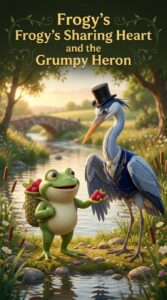
The Sweetberry Lesson: Frog and Heron Gratitude Story (PDF)
Frogy the frog offers sweetberries to Gideon the heron beside the river. The Sweetberry Lesson is a picture book about thankfulness. Includes one 12-page illustrated English PDF. Download after purchase to read on screen or print. No physical book is shipped.

-

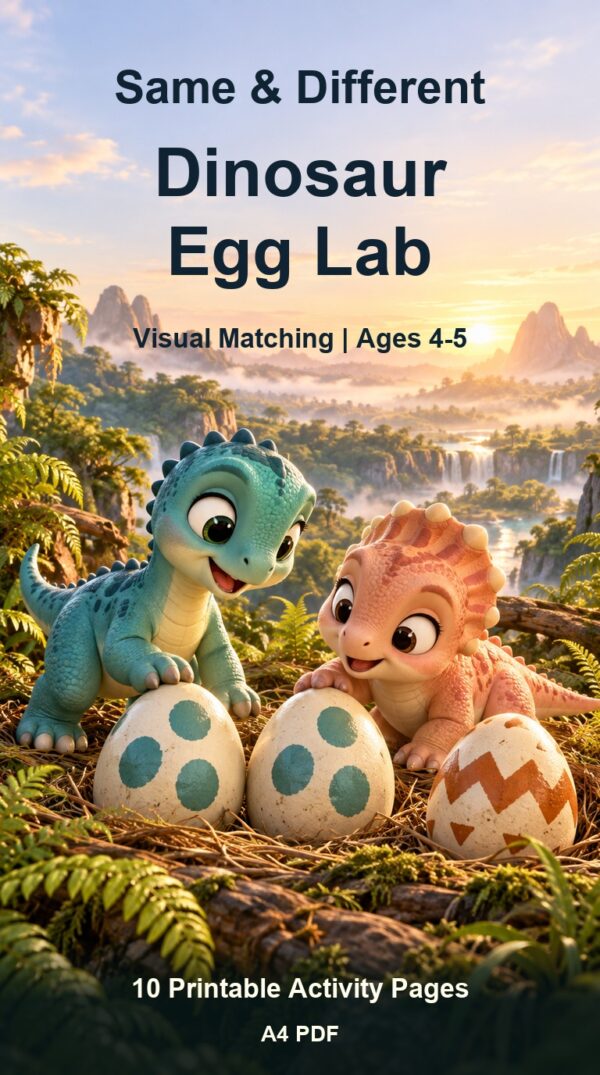
Same and Different Worksheets for Ages 4-5: Dinosaur Egg Lab (Printable PDF)
$2.99 Add to cart -
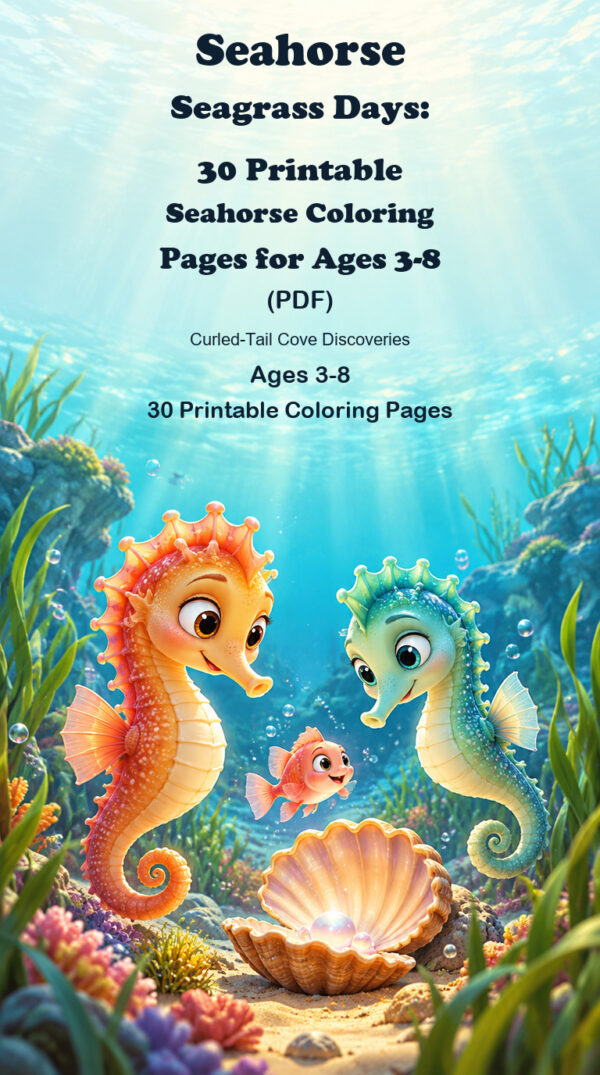
Seahorse Seagrass Days: 30 Printable Seahorse Coloring Pages for Ages 3-8 (PDF)
$3.99 Add to cart -
Easy Mazes for Ages 3-4: Duckling Pond Paths (Printable PDF)
$2.99 Add to cart -
Octopus Reef Days: 30 Printable Octopus Coloring Pages for Ages 3-8 (PDF)
$3.99 Add to cart