
A sleepy child asks for “just one more story,” and the book closest at hand often wins. That is why the question of print books versus ebooks is less about declaring one format best and more about choosing what helps your child settle in, listen closely, and connect with a meaningful story.
For families raising readers, both print and digital books can have a valued place. A paperback can become a treasured part of the bedtime routine, while a downloadable ebook can save the evening when the library book is missing or a new story is needed right away. The most helpful choice depends on your child’s age, your routine, and the reading experience you want to create.
Print Books Versus eBooks: The Real Question
Young children do not need a debate about formats. They need stories shared with care. Whether the pages turn on paper or on a device, a child benefits when an adult slows down, uses a warm voice, asks a gentle question, and makes room for the lesson inside the story.
Still, the formats offer different strengths. Print books are physical, familiar, and free from device notifications. Ebooks are convenient, portable, and often available the moment a family needs them. Understanding those trade-offs can help caregivers build a reading routine that feels peaceful rather than pressured.
Why print books feel special to many children
A printed book gives children something they can hold, point to, and revisit independently. Even before they can read the words, preschoolers learn how books work by turning pages, following pictures, and noticing that a story has a beginning, middle, and end. These small actions support early literacy and confidence.
Print books can also make bedtime feel more settled. There is no brightness to adjust, no battery to charge, and no temptation to switch from the story to another app. For children who are easily distracted or have a hard time winding down, the simple experience of sitting close with a physical book can be especially calming.
Many families also enjoy the emotional memory attached to a well-loved book. A bent corner, a favorite illustration, or a familiar phrase can bring back the comfort of hundreds of shared reading moments. Children may ask for the same story again and again because repetition helps them feel secure and lets them understand new details each time.
That said, print books are not always the easiest option. They can be misplaced, damaged, or unavailable when a child suddenly wants a story about kindness, honesty, or courage. Building a home library takes time and space, and buying many new books can stretch a family budget.
Where ebooks can support busy families
Ebooks solve a practical problem that caregivers know well: sometimes bedtime arrives before you have found the next book. A downloadable story can be ready in minutes, whether you are at home, visiting grandparents, traveling, or preparing for quiet time in a classroom.
Digital books are also useful for families who want choice without adding clutter. A small collection of files can hold many stories and themes, allowing adults to select a tale that fits the moment. If siblings are struggling to share, a story about fairness may open a helpful conversation. If a child has made a mistake, a gentle tale about honesty can reinforce the idea that truthfulness builds trust.
For parents and educators, ebooks can be flexible in another important way. A PDF can be read on a tablet, computer, or phone when needed, but it can also be printed for a more traditional read-aloud experience. This gives families the convenience of an immediate download while allowing them to choose a screen-free reading moment later.
The main concern with ebooks is not the story itself. It is the way the device is used. A device full of games, videos, alerts, and bright colors can make it harder for a child to focus on reading. When an ebook becomes part of bedtime, it helps to treat the device like a book rather than entertainment.
Creating a Healthy Ebook Reading Routine
An ebook can support a soothing bedtime routine when the reading experience is intentional. If possible, use a larger screen rather than a small phone, lower the brightness, and turn off notifications before the story begins. Keep the device in the caregiver’s hands for younger children so the focus remains on the pages and pictures, not on tapping away from the story.
Read slowly. Pause when your child notices something in an illustration. Ask simple questions such as, “How do you think the character feels?” or “What could they do differently next time?” These moments build comprehension and help children connect a story’s moral lesson to their own lives.
It can also be helpful to create a clear ending. When the final page is read, close the ebook, say goodnight, and move on to the next bedtime step. This teaches children that reading on a device does not have to lead to more screen time.
For some families, printing a favorite ebook is the best of both worlds. A child can receive a new story quickly, then enjoy it as a paper book during future read-alouds. Printed pages can be placed in a folder, stapled into a simple booklet, or kept in a special bedtime basket. Children often enjoy seeing their own small library grow.
What Matters More Than the Format
The strongest reading habits are built through consistency, connection, and stories worth returning to. A child who hears ten loving minutes of reading each evening is gaining far more than vocabulary. They are learning that books are a source of comfort, curiosity, and guidance.
The content of the story matters, too. Children are always watching how characters make choices. A tale about diligence can encourage a child to keep trying. A story about humility can show that being capable does not mean acting superior. A thoughtful fable about unity can help children understand that cooperation makes a family, classroom, or community stronger.
When a story includes a clear moral without sounding like a lecture, children can absorb the lesson naturally. They remember how a character felt after telling the truth, helping a friend, or choosing patience. Those emotional connections are often what stay with them after the book is closed.
Adult participation makes this learning richer. You do not need to turn every bedtime story into a long discussion. One caring observation is enough: “That was kind of her to help,” or “He was brave to admit what happened.” Over time, these brief conversations give children language for values they are still learning to practice.
Consider your child’s needs
Some children are drawn to the texture and independence of print. Others are excited by seeing a new ebook appear right away. A reluctant reader may respond well to a fresh digital story chosen around an interest or challenge they are facing. A child who becomes overstimulated by screens may do better with paper at night and ebooks earlier in the day.
Age matters as well. Very young children often benefit from the hands-on experience of board books and picture books, while early elementary readers may enjoy the independence and portability of digital titles. There is no need to force one format for every child or every season of family life.
Educators can use the same flexible approach. A printed book may work best for a circle-time read-aloud, while an ebook can be a practical resource for small groups, take-home reading, or a lesson that calls for a specific character theme. What matters is that the story is accessible, engaging, and shared with purpose.
A Simple Way to Choose Tonight’s Story
If your child needs help settling down, reach for the format that creates the fewest distractions. If you need a meaningful story immediately, an ebook may be the kindest solution for a busy evening. If a child has fallen in love with a digital story, consider printing it or reading it repeatedly so it becomes part of the family’s rhythm.
You do not have to choose print books or ebooks forever. You can use both with intention: paper books for cozy rituals, downloadable stories for convenience, and value-centered tales whenever a child needs encouragement. The goal is not a perfect bookshelf or a perfect device policy. It is a child who feels safe, seen, and eager to hear what happens on the next page.
Tonight, choose one story that gives your child a reason to smile, think, or talk. The format will fade from memory. The feeling of being read to with love will not.

The Baker and the Brave: Inner Beauty Story for Kids (PDF)
Egon is a large snow leopard who enjoys baking berry pies. The Baker and the Brave is a picture book about inner beauty for ages 3-8. Includes one 12-page illustrated English PDF. Download after purchase to read on screen or print. No physical book is shipped.



-

Same and Different Worksheets for Ages 4-5: Dinosaur Egg Lab (Printable PDF)
$2.99 Add to cart -
Seahorse Seagrass Days: 30 Printable Seahorse Coloring Pages for Ages 3-8 (PDF)
$3.99 Add to cart -
Easy Mazes for Ages 3-4: Duckling Pond Paths (Printable PDF)
$2.99 Add to cart -
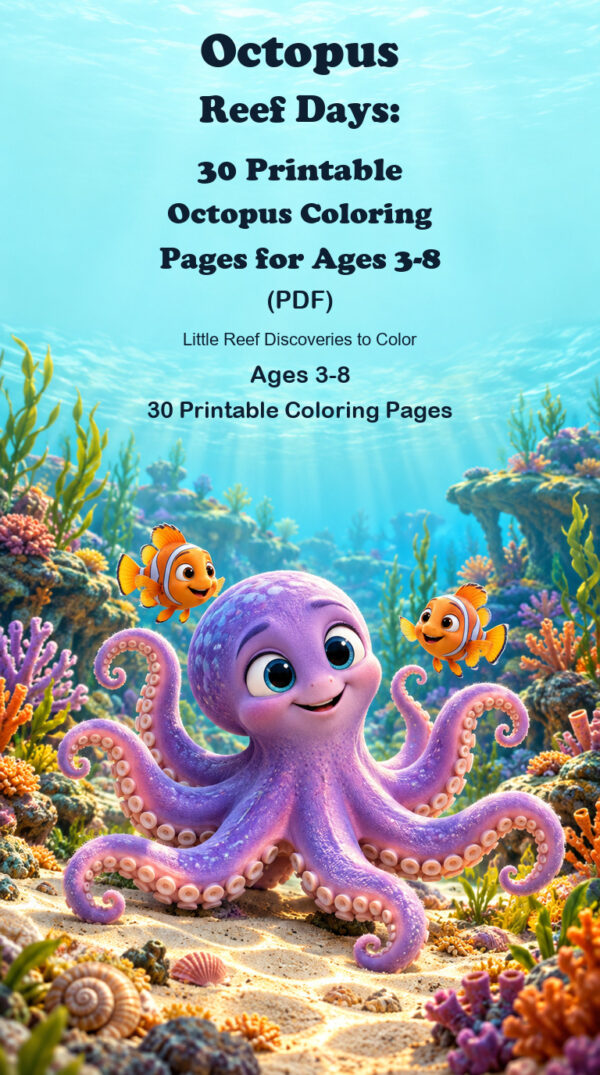
Octopus Reef Days: 30 Printable Octopus Coloring Pages for Ages 3-8 (PDF)
$3.99 Add to cart