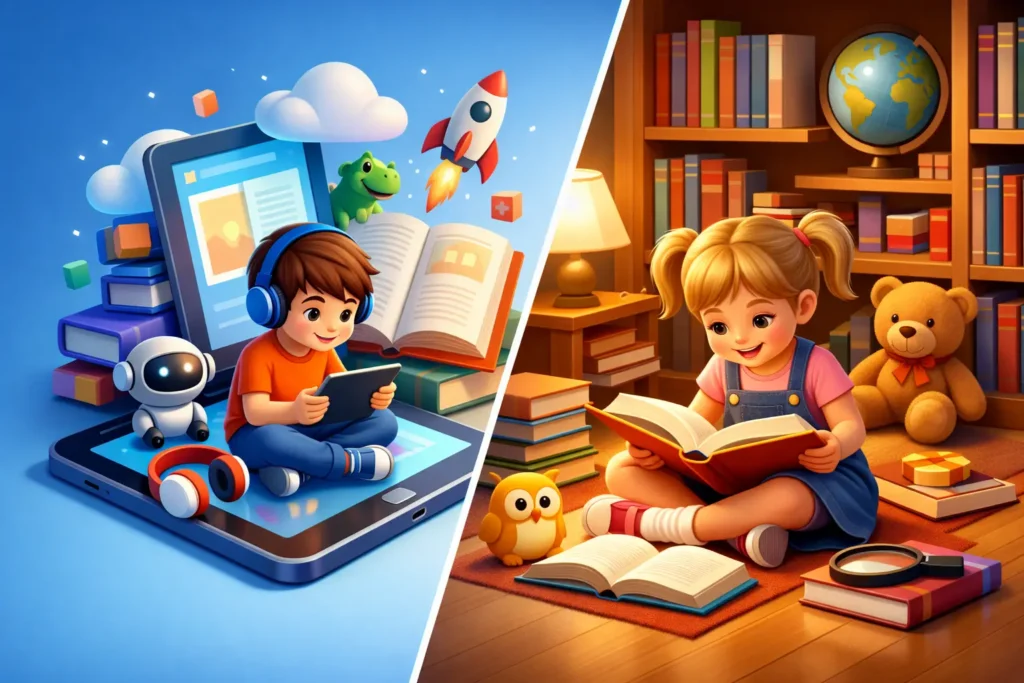
The book your child asks for after bath time can shape more than a peaceful bedtime. It can become a familiar place to talk about honesty, kindness, courage, and the feelings that were too big to explain during the day. When parents weigh digital books versus library books, the best choice is rarely about declaring one format better. It is about choosing the kind of reading experience your child needs that night.
A library visit can bring the thrill of discovery. A ready-to-download story can rescue an overtired evening when leaving the house is not possible. Both can help children grow into readers, and both can make story time feel meaningful when adults use them with intention.
Digital Books Versus Library Books: What Each Offers
Library books bring a special kind of anticipation. Children get to browse colorful shelves, notice a cover that catches their eye, and carry home a small stack chosen just for them. That sense of ownership, even when temporary, encourages curiosity. For preschoolers and early elementary readers, trips to the library also teach gentle responsibility: books are borrowed, cared for, and returned so another child can enjoy them.
Looking for a calming bedtime activity?
Download our soothing coloring storybooks — 30+ delightful printable pages for children ages 3–8. Ready to print instantly for only $17.00!
Digital books solve a different, very real family need: access. A downloadable PDF can be available within minutes, whether you are preparing for bedtime, traveling to Grandma’s house, or filling a quiet part of the afternoon. There is no waitlist, due date, or worry that a favorite story has to go back before your child is ready to hear it again.
For character-focused stories, repeat reading matters. A child may need to hear how a character makes an honest choice several times before they begin connecting that lesson to their own life. With a digital book, families can return to the same reassuring story whenever the moment calls for it. A child nervous about sharing, frustrated after a disagreement, or proud of working hard can revisit a story that gives those feelings a name and a helpful example.
Neither format automatically creates a strong reading habit. The warmth of the adult, the consistency of the routine, and the conversation around the story matter most.
The Case for Library Books
Library books are especially valuable when your child’s interests are changing quickly. One week they may be fascinated by dinosaurs, and the next they may want stories about first days of school or friendly dragons. Borrowing lets families explore widely without buying every title that catches a child’s attention.
The library can also make reading feel like an outing rather than another item on a busy schedule. Letting a child select a few books gives them a voice in story time, which can reduce resistance later. If they chose the book, they are often more eager to see what happens inside.
Physical books offer a hands-on reading experience that many young children love. They can turn pages, point to small details in illustrations, and watch how much of the story is left. For children still learning how books work, these actions build print awareness in a natural way.
Nurture kindness & empathy tonight
Explore our gentle moral bedtime fables for children ages 3–8. Heart-warming character-building stories ready to read instantly for only $17.00!
There are trade-offs. The exact book you want may be checked out. A due date can interrupt a beloved read-aloud. And while libraries offer wonderful variety, the pile you bring home may not always include a story that fits a specific emotional or character lesson your child needs right now.
Why Digital Books Work So Well for Busy Families
Digital books are not meant to replace every shelf in your home or every library trip. They are a practical addition to a family reading life, particularly when convenience helps reading happen more often.
A downloadable children’s book is easy to keep on a phone, tablet, computer, or e-reader. Many parents also print favorite PDFs and place them in a small bedtime basket. That option can be useful for families seeking a screen-light experience while still enjoying the flexibility of a digital purchase. A printed copy can travel from bedroom to car to classroom without worrying about a library deadline.
Digital books also make it simple to build a purposeful collection. Instead of hoping a random story touches on a current challenge, you can choose a book centered on a value your child is practicing. A story about humility can open a calm conversation after a child has struggled with losing. A tale about fairness can support siblings who are learning to take turns. A book about diligence can encourage a child who wants to give up too soon.
At Bed Time Kids Fables, short downloadable stories are designed with this kind of intentional reading in mind. The goal is not to turn bedtime into a lecture. It is to give children an engaging story first, then create a gentle opening for the values families want to nurture.
Digital reading does require thoughtful boundaries. If a book is read on a bright device just before sleep, some children may become distracted by notifications, games, or the temptation to keep tapping. A dedicated e-reader, airplane mode, lowered brightness, or a printed PDF can help protect the calm mood you are trying to create.
Choosing the Right Format for Your Child
Your child’s age, temperament, and family routine should guide the decision. A child who thrives on choosing from a wide range of topics may love regular library visits. A child who finds comfort in repetition may benefit from having a small set of digital favorites always available.
Think about the purpose of each reading moment. If you are planning a weekend outing and want to encourage exploration, the library is a lovely choice. If bedtime is fifteen minutes away and your child needs a story about being kind after a difficult day, a digital book can meet that need immediately.
It also helps to consider how your child engages. Some children focus best with a paper copy in their hands. Others are excited by enlarging illustrations on a screen or listening as an adult reads from a tablet. The format is less important than keeping the reading experience interactive. Pause to ask what your child notices. Wonder aloud why a character made a choice. Let them predict what might happen next.
For beginning readers, digital books can be helpful when an adult stays close. You can enlarge text, reread a page without losing your place, and move at a pace that feels encouraging rather than pressured. Physical library books can offer the same learning value, especially when children can point to words and follow along with a finger.
A Balanced Family Reading Routine
The most practical answer is often both. Use library books to keep your child’s world full of fresh topics, new authors, and spontaneous discoveries. Keep a small digital collection of meaningful stories for the evenings when you want dependable access to a favorite lesson or a comforting read.
You might visit the library every week or two and let your child choose several fun, interest-led books. Then reserve a few familiar digital titles for bedtime. Familiarity helps children settle, while variety keeps reading joyful. This balance also shows children that books come in many forms, but stories always deserve their attention.
Try to protect a simple reading ritual regardless of format. Choose a quiet spot, put distracting apps away, and give the story your full presence for a few minutes. Ask one easy question afterward, such as, “What was the kind choice in this story?” or “What would you do if that happened to you?” A short conversation helps the lesson stay with your child without making story time feel like homework.
The right book is the one that brings your child close, sparks their imagination, and gives them one more gentle idea to carry into tomorrow.

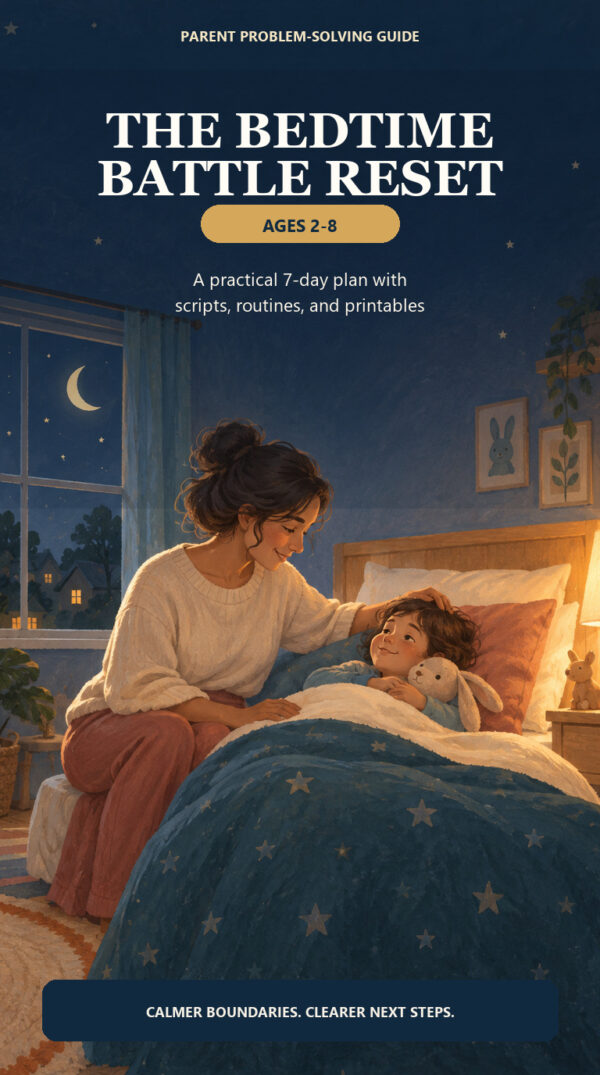
The Bedtime Battle Reset: A 7-Day Parent Guide for Ages 2-8
- Instant Downloadable & Printable PDF (Print at home or read on tablet)
- Soothing bedtime illustrations & gentle character-building moral
- Specially crafted for kids ages 3 to 8
-

The Bedtime Battle Reset: A 7-Day Parent Guide for Ages 2-8
$17.00 Add to cart -
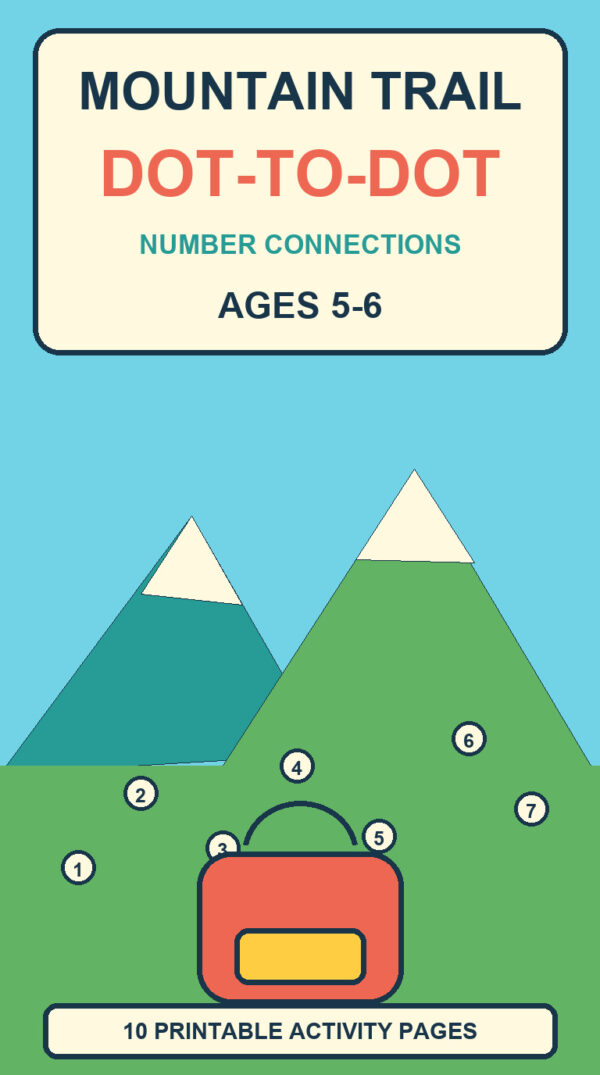
Mountain Trail Dot-to-Dot: Number Connections for Ages 5–6
$5.00 Add to cart -
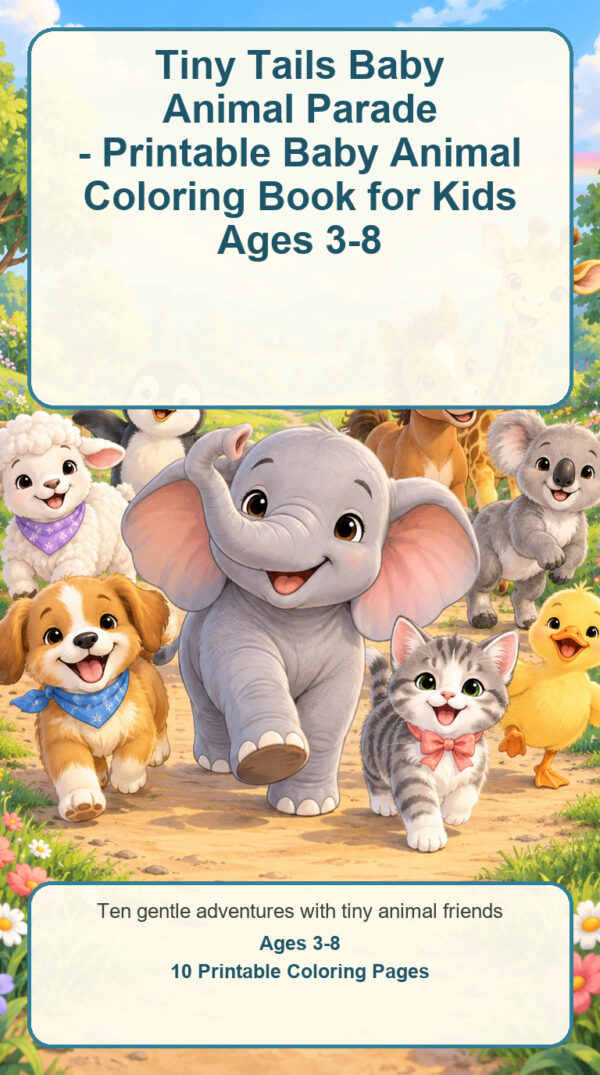
Tiny Tails Baby Animal Parade – Printable Baby Animal Coloring Book for Kids Ages 3-8
$5.00 Add to cart -
Sprinkle Street Sweethearts – Printable Sweet Treat Coloring Book for Kids Ages 3-8
$5.00 Add to cart