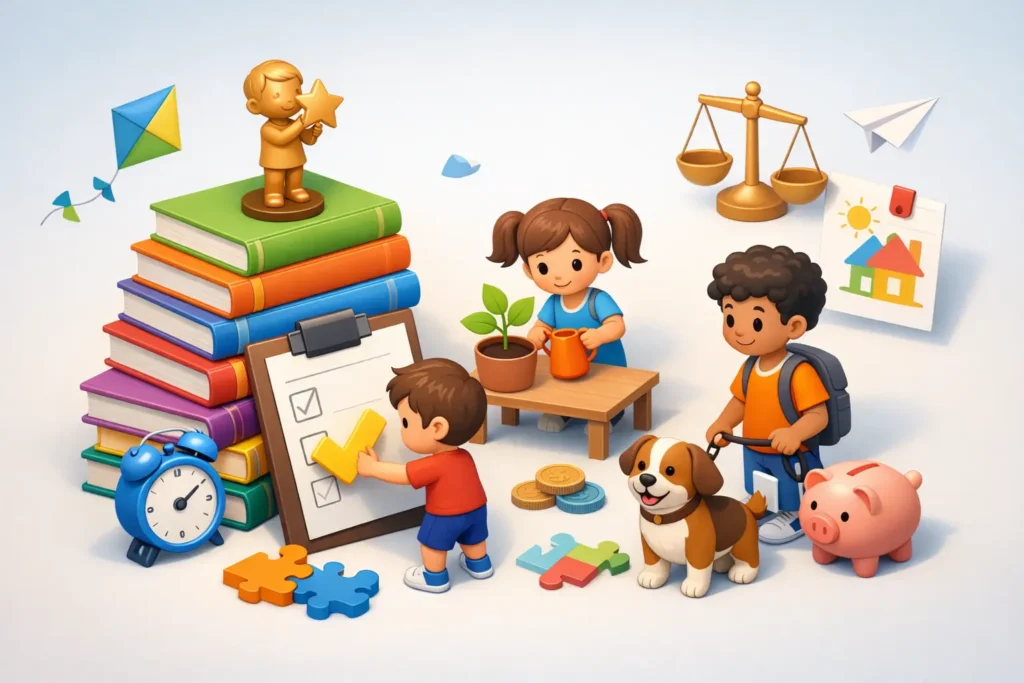
A forgotten backpack, a bedroom floor covered in blocks, an unkind choice made during recess – these small childhood moments can bring big feelings. The best top responsibility books children enjoy do more than tell young readers to behave. They give children a safe way to see mistakes, consider consequences, and learn that they can make things better.
For parents, grandparents, and educators, a story can open a calmer conversation than a lecture ever could. At bedtime or during quiet reading time, children can meet characters who avoid a chore, blame someone else, lose something valuable, or discover the pride that comes from helping. The lesson feels memorable because it is wrapped in a story they want to hear again.
What Responsibility Looks Like for Young Children
Responsibility is a large word, especially for preschoolers and early elementary students. For a young child, it may mean putting crayons away, feeding a pet with an adult, carrying a lunchbox to the kitchen, or telling the truth after spilling juice. For an older child, it can include keeping promises, caring for belongings, owning a mistake, and thinking about how choices affect other people.
Looking for a calming bedtime activity?
Download our soothing coloring storybooks — 30+ delightful printable pages for children ages 3–8. Ready to print instantly for only $17.00!
A helpful responsibility story does not make children feel ashamed for being imperfect. Instead, it shows that responsibility grows through practice. Characters may make a poor choice, but they also have a chance to repair, apologize, try again, or ask for help. That hopeful message is what makes character education feel encouraging rather than heavy.
10 Top Responsibility Books for Children
The following books offer different windows into responsibility. Some focus on everyday chores, while others explore accountability, money, community, and perseverance. Choose one that reflects what your child is working through right now.
1. What If Everybody Did That? by Colleen M. Madden
This lively picture book follows a boy whose ordinary choices create very big consequences when everyone does the same thing. Dropping a soda can, splashing in the sink, or skipping a step may seem small, but the story helps children understand why rules and consideration matter.
It is especially useful for children ages 4 to 8 who are beginning to test limits. After reading, ask, “What is one small choice that helps everyone in our family?” The answer might be putting shoes by the door or taking turns with a favorite toy.
2. The Berenstain Bears and the Messy Room by Stan and Jan Berenstain
When Brother and Sister Bear let their room get out of control, finding anything becomes a frustrating adventure. The familiar family setting makes this a gentle choice for children who need help connecting cleanup with caring for their own space.
The story works best when it is followed by a small, realistic task. Rather than asking a child to clean an entire room, invite them to return books to a shelf or collect stuffed animals in a basket. A manageable success builds confidence.
Nurture kindness & empathy tonight
Explore our gentle moral bedtime fables for children ages 3–8. Heart-warming character-building stories ready to read instantly for only $17.00!
3. The Little Red Hen retold by various authors
Few folktales make the connection between work and results as clearly as The Little Red Hen. The hen asks for help planting wheat, harvesting it, and baking bread, but the other animals refuse. When the bread is ready, they are eager to share in the reward.
This classic is valuable because it introduces effort and contribution. It can also lead to a thoughtful family conversation: helping should not only happen when there is a treat at the end. Look for a retelling with illustrations and language that fit your child’s age.
4. But It’s Not My Fault! by Julia Cook
This humorous story centers on Noodle, a child who has a reason why every problem belongs to someone else. Young readers will recognize the temptation to blame a sibling, a friend, or even a pet when things go wrong.
The book supports children who are learning to own their actions without feeling crushed by guilt. Try a simple follow-up phrase at home: “What was your part, and what can you do next?” It keeps the focus on repair instead of punishment.
5. The Worst Day of My Life EVER! by Julia Cook
R. J. has one difficult day after another because he forgets directions and rushes from one activity to the next. His experience shows how listening, slowing down, and following through can change the way a day feels.
This is a strong pick for children who struggle with morning routines, classroom expectations, or remembering multi-step tasks. The lesson is practical: responsibility is not always about doing more. Sometimes it is about paying attention to the task already in front of you.
6. Too Many Toys by David Shannon
Spencer has an overflowing collection of toys and does not want to give up a single one. When his mother asks him to make room, he discovers that caring for possessions also means organizing them and making thoughtful choices about what he truly uses.
This story is a kind way to introduce tidying, donating, and gratitude. It may be particularly helpful before birthdays or holidays, when new toys are likely to enter the home. Keep the follow-up gentle: offer a child a choice of a few toys to pass along rather than demanding a large cleanout.
7. Alexander, Who Used to Be Rich Last Sunday by Judith Viorst
Alexander starts with a dollar and imagines all the ways he will spend it. By the end, a series of tempting choices has left him with very little. The funny, relatable story introduces the idea that money is a responsibility, even in small amounts.
For elementary-age children, this book can begin conversations about saving, spending, and waiting. A child does not need an allowance to understand the lesson. They can practice choosing between using a gift card now or saving it for something they genuinely want later.
8. A Chair for My Mother by Vera B. Williams
After a fire destroys a family’s home, a young girl, her mother, and her grandmother save coins in a jar for a comfortable chair. Their shared goal shows responsibility as caring for one another and contributing to family life.
This tender book expands the idea of responsibility beyond chores. Children see that even small contributions matter when people work together. It also offers an opening to discuss gratitude, saving, and the ways families support one another during hard times.
9. The Boy Who Harnessed the Wind by William Kamkwamba and Bryan Mealer
Based on a true story, this picture book tells how William Kamkwamba used curiosity, reading, and determination to help his village during a drought. He faced obstacles, but he continued learning and working toward a solution.
This choice is best for older elementary readers or for sharing aloud with younger children who enjoy longer stories. It frames responsibility as using your abilities to help your community. The message is inspiring without pretending that hard work always solves every problem alone.
10. The Empty Pot by Demi
Ping cares deeply for flowers, so when the emperor gives children seeds and promises a reward for the finest bloom, he works faithfully. Yet nothing grows. While others arrive with beautiful flowers, Ping brings an empty pot and tells the truth.
This beautiful story reminds children that responsibility includes honesty when the outcome is disappointing. It is a meaningful read for children who fear getting in trouble after a mistake. The lesson is clear: doing the right thing can take courage, and honesty earns trust.
How to Make a Responsibility Story Stick
The most meaningful part of reading often comes after the final page. Keep the conversation light and specific. You might ask what choice the character made, how that choice affected someone else, or what the child would do in a similar situation. A single question is enough, especially at bedtime.
Then connect the story to one small opportunity the next day. If the book was about caring for belongings, invite your child to put one treasured item in its proper place. If it was about accountability, help them practice an apology that includes what they will do differently next time. The goal is not perfection. It is helping children notice that their choices have power.
Responsibility stories also work best when adults model the same behavior. Saying, “I forgot to pack your water bottle, and I am sorry. I will put it by the door tonight,” shows children that owning mistakes is something grown-ups do too. This creates a home or classroom where responsibility feels safe, normal, and worth practicing.
A well-chosen bedtime story can turn tomorrow’s reminder into a lesson your child already understands. Read with warmth, leave room for questions, and celebrate every small moment when your child chooses to help, tell the truth, or try again.

The Bedtime Battle Reset: A 7-Day Parent Guide for Ages 2-8
- Instant Downloadable & Printable PDF (Print at home or read on tablet)
- Soothing bedtime illustrations & gentle character-building moral
- Specially crafted for kids ages 3 to 8


-

The Bedtime Battle Reset: A 7-Day Parent Guide for Ages 2-8
$17.00 Add to cart -
Mountain Trail Dot-to-Dot: Number Connections for Ages 5–6
$5.00 Add to cart -
Tiny Tails Baby Animal Parade – Printable Baby Animal Coloring Book for Kids Ages 3-8
$5.00 Add to cart -
Sprinkle Street Sweethearts – Printable Sweet Treat Coloring Book for Kids Ages 3-8
$5.00 Add to cart